

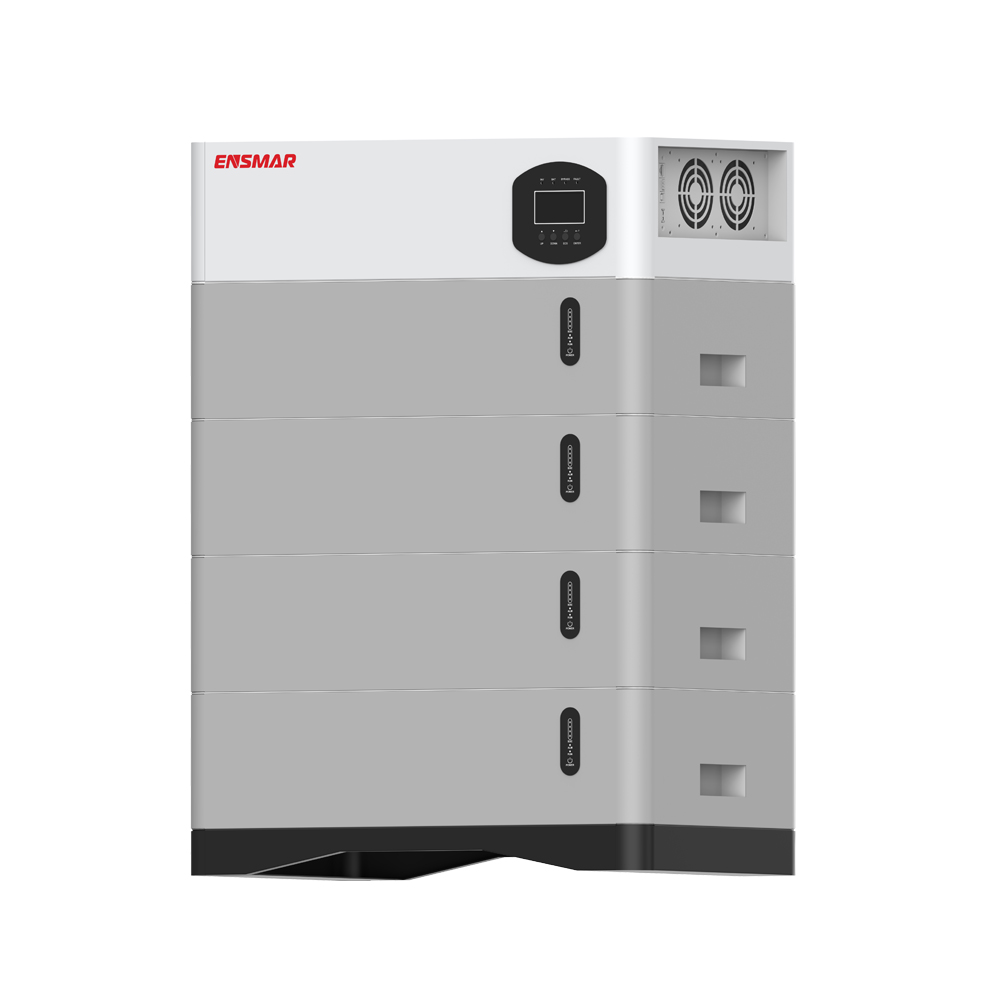


Stackable All-in-One Off-Grid Solar Power System from China Suppliers and Factory - NSMAR Tethys-Series
Product Features
Technical Description
| Item | Model No. | Tethys 0505X-H | Tethys 1005X-H | Tethys 0505X-V | |||||||||
| Inverter (KW) | 5KW | 10KW | 6KW | ||||||||||
| Battery (KWh) | 5 | 10 | 15 | 20 | 10 | 15 | 20 | 25 | 30 | 5 | 10 | 15 | |
| Battery Module | Voltage | 51.2V | 51.2V | ||||||||||
| Capacity | 100Ah | 100Ah | |||||||||||
| Charge Voltage | 58V | 58V | |||||||||||
| Discharge Cut-off Voltage | 42V | 42V | |||||||||||
| Charge Current | 50A | 50A | |||||||||||
| Max Charge Current | 100A | 100A | |||||||||||
| Discharge Current | 50A | 50A | |||||||||||
| Max Discharge Current | 100A | 100A | |||||||||||
| Communication | RS485 / CAN | RS485 / CAN | |||||||||||
| Connector Pass-through Current | 100A (continuous) | 200A (continuous) | 100A (continuous) | ||||||||||
| Size | 231*410*150mm | 480*460*147mm | |||||||||||
| Off-Grid Inverter | Power | 5KW | 10KW | 12KW | |||||||||
| Output Voltage | 230VAC | 230VAC | |||||||||||
| Frequency | 50Hz / 60Hz | 50Hz / 60Hz | |||||||||||
| Input Power (PV) | 5.5KW | 11KW | 8KW | ||||||||||
| Input Voltage Range (PV) | 120~450VDC | 120~450VDC | |||||||||||
| Interface | RS485 / CAN | RS485 / CAN | |||||||||||
| Size | 231*410*240mm | 395*460*147mm | |||||||||||
| General | Noise (dB) | < 40dB (1 meter) | |||||||||||
| Humidity | 0~95% (no condensation) | ||||||||||||
| Operation Temperature | -10℃ ~ +50℃ | ||||||||||||
| Altitude (m) | 1500m | ||||||||||||
| Warranty | 5 years (2 years for inverter part) | ||||||||||||
Tips About Lithium Battery
Generators play a significant role in energy storage applications, especially in providing backup power, enhancing system reliability, and supporting grid stability. Here’s an overview of their functions, benefits, and considerations:
1. Backup Power Supply
Purpose: Provide electricity during power outages or when the main power source is unavailable.
Usage: Commonly used in critical facilities like hospitals, data centers, and industrial plants to ensure continuous operation.
2. Peak Shaving and Load Management
Purpose: Reduce demand charges by generating power during peak load times.
Usage: Combined with energy storage systems, generators can help manage load profiles and reduce electricity costs.
3. Renewable Energy Integration
Purpose: Complement intermittent renewable energy sources like solar and wind.
Usage: Generators can provide power when renewable sources are insufficient, ensuring a stable energy supply.
4. Grid Support and Stability
Purpose: Provide ancillary services to the grid, such as frequency regulation and voltage support.
Usage: Generators can be quickly dispatched to stabilize the grid during fluctuations or emergencies.
1. Reliability and Resilience
Benefit: Generators enhance the reliability of energy storage systems by providing a dependable power source during outages or low renewable generation periods.
2. Flexibility
Benefit: They can be used in various applications, from small residential setups to large industrial facilities, offering flexibility in system design and operation.
3. Cost Savings
Benefit: By using generators during peak times, facilities can reduce demand charges and overall energy costs, leading to significant financial savings.
4. Scalability
Benefit: Generators can be easily scaled up or down based on the power requirements of the facility, making them adaptable to different energy needs.
1. Diesel Generators
Pros: High power output, reliability, and quick start-up times.
Cons: High emissions and fuel costs, noise, and maintenance requirements.
2. Natural Gas Generators
Pros: Cleaner burning than diesel, lower emissions, and often more cost-effective.
Cons: Dependence on natural gas supply infrastructure and potential fuel price volatility.
3. Biomass Generators
Pros: Renewable and sustainable, can use various organic materials as fuel.
Cons: Limited scalability, fuel availability, and potential environmental impacts.
4. Hybrid Generators
Pros: Combine different power sources (e.g., solar and diesel) to optimize performance and efficiency.
Cons: Higher initial costs and complex system integration.
1. Sizing and Capacity
Consideration: Ensure the generator is appropriately sized to meet the peak load and backup power requirements of the facility.
2. Fuel Supply and Storage
Consideration: Assess the availability and logistics of fuel supply, including storage capacity and refueling frequency.
3. Environmental Impact
Consideration: Evaluate emissions, noise levels, and potential environmental regulations, especially in urban or sensitive areas.
4. Operational Costs
Consideration: Calculate the total cost of ownership, including initial investment, fuel costs, maintenance, and potential savings.
5. System Integration
Consideration: Ensure seamless integration with the energy storage system and the facility’s power management infrastructure, including synchronization, control systems, and safety mechanisms.
6. Maintenance and Reliability
Consideration: Regular maintenance is crucial to ensure the reliability and longevity of the generator. Develop a maintenance schedule and plan for periodic inspections and servicing.
Generators are essential components in energy storage applications, offering reliable backup power, supporting load management, and enhancing grid stability. By carefully considering the type of generator, sizing, fuel supply, environmental impact, operational costs, and system integration, facilities can optimize their energy storage solutions to achieve greater efficiency, resilience, and cost savings.