Picking out the right Car Battery isn’t exactly something to take lightly — it’s a pretty big deal because it really impacts how well your car runs and how long it stays healthy. Did you know that the market for car batteries is expected to hit around $21.6 billion by 2026? Yeah, that’s a lot of options, which makes understanding what to look for even more important these days. Cars today are packed with tech, so the batteries have to keep up, which means making an informed choice is key.
Peter Davidson, who’s a big name in the automotive battery world and the author of "The Power Behind Performance," puts it simply: “Choosing the correct car battery not only ensures reliable vehicle operation but also extends the vehicle's overall lifespan.” Basically, it’s a reminder that drivers need to pay attention to things like the right battery type, how much capacity it has, and whether it’s a good match for their car’s electrical system. With so many options out there, I’ve put together this guide to help you find the perfect car battery that suits your vehicle’s specific needs — making the whole process a lot less overwhelming.
Understanding the Importance of Choosing the Right Car Battery
Choosing the right car battery is crucial for ensuring optimal vehicle performance and longevity. The right battery not only provides the necessary power for starting the engine and operating accessories but also affects fuel efficiency and overall reliability. According to industry reports, approximately 25% of all vehicle breakdowns are battery-related, underscoring the importance of selecting a high-quality battery that meets a vehicle's specific requirements.
At Shenzhen Ensmar Technology Co., Ltd., we recognize the significance of dependable energy solutions. Our expertise in lithium energy storage allows us to highlight the advantages of lithium batteries in automotive applications.
Lithium batteries offer a higher energy density and longer lifespan compared to traditional lead-acid batteries, making them an increasingly popular choice across the automotive sector. Research indicates that lithium-ion batteries can last up to three times longer than their lead-acid counterparts, translating to fewer replacements and lower overall costs for vehicle owners.
As the industry continues to innovate, choosing the right car battery not only enhances vehicle performance but also aligns with sustainable practices, leading to a smarter and greener future in transportation.
Identifying Your Vehicle's Battery Specifications and Requirements
When selecting the right car battery for your vehicle, understanding your vehicle's battery specifications and requirements is crucial. Every vehicle model comes with specific power demands, and a misfit battery can lead to suboptimal performance or even damage. According to the Battery Council International, nearly 60% of battery failures are due to incorrect battery selection. Prior to purchasing, check your owner's manual for important specifications such as group size, cold cranking amps (CCA), and reserve capacity (RC).
The CCA is particularly important, especially in colder climates, as it indicates the battery's ability to start an engine in low temperatures. For instance, most passenger vehicles require a CCA rating between 400-800, depending on engine size and environmental conditions. Additionally, the reserve capacity tells you how long your battery can run on its own power without the engine. A battery with a higher RC rating will provide more assurance during unexpected situations, such as when your vehicle's alternator fails. By understanding these specifications, you can ensure that you select a battery that will keep your vehicle running safely and reliably.
Exploring Different Types of Car Batteries Available in the Market
When selecting the right car battery for your vehicle, it's essential to understand the various types available in the market. The most common battery types include lead-acid, lithium-ion, and nickel-metal hydride. Lead-acid batteries are widely used due to their affordability and proven reliability, making them a go-to choice for conventional vehicles. In contrast, lithium-ion batteries are rapidly gaining popularity, especially for electric vehicles (EVs), due to their lightweight design and higher energy efficiency.
The growth of the global battery market, projected to reach $394.68 billion by 2032, underscores the increasing demand for advanced battery solutions. This expansion is primarily driven by the thriving electric vehicle sector, where lithium-ion batteries dominate. Meanwhile, other battery types, such as nickel-metal hydride, continue to serve hybrid vehicles, providing a balance between performance and environmental impact. As consumers become more informed, understanding these battery types will empower them to make better choices tailored to their driving needs.
Evaluating Battery Brands: Quality and Reputation Considerations
When selecting a car battery, evaluating battery brands is crucial due to their quality and reputation. A reputable brand typically offers batteries that comply with industry standards, ensuring better performance and longevity. For instance, studies show that premium brands tend to have a failure rate of less than 5%, whereas lower-tier brands can have rates exceeding 20%. This disparity can significantly affect your vehicle's reliability and your overall driving experience.
At Shenzhen Ensmar Technology Co., Ltd., we understand the importance of quality in energy solutions. Our lithium batteries are designed with advanced technology that not only enhances performance but also contributes to the sustainability of energy consumption. Choosing a reputable brand for your car battery is critical, as it influences your vehicle's performance.
Tips:
- Always check product reviews and ratings for insights into durability and customer satisfaction.
- Consider batteries designed to withstand extreme weather conditions, which can enhance performance and lifespan.
- Look for brands that provide warranties, as they can reflect manufacturer confidence in the product's quality.
Checking Battery Size, Terminal Configuration, and Compatibility
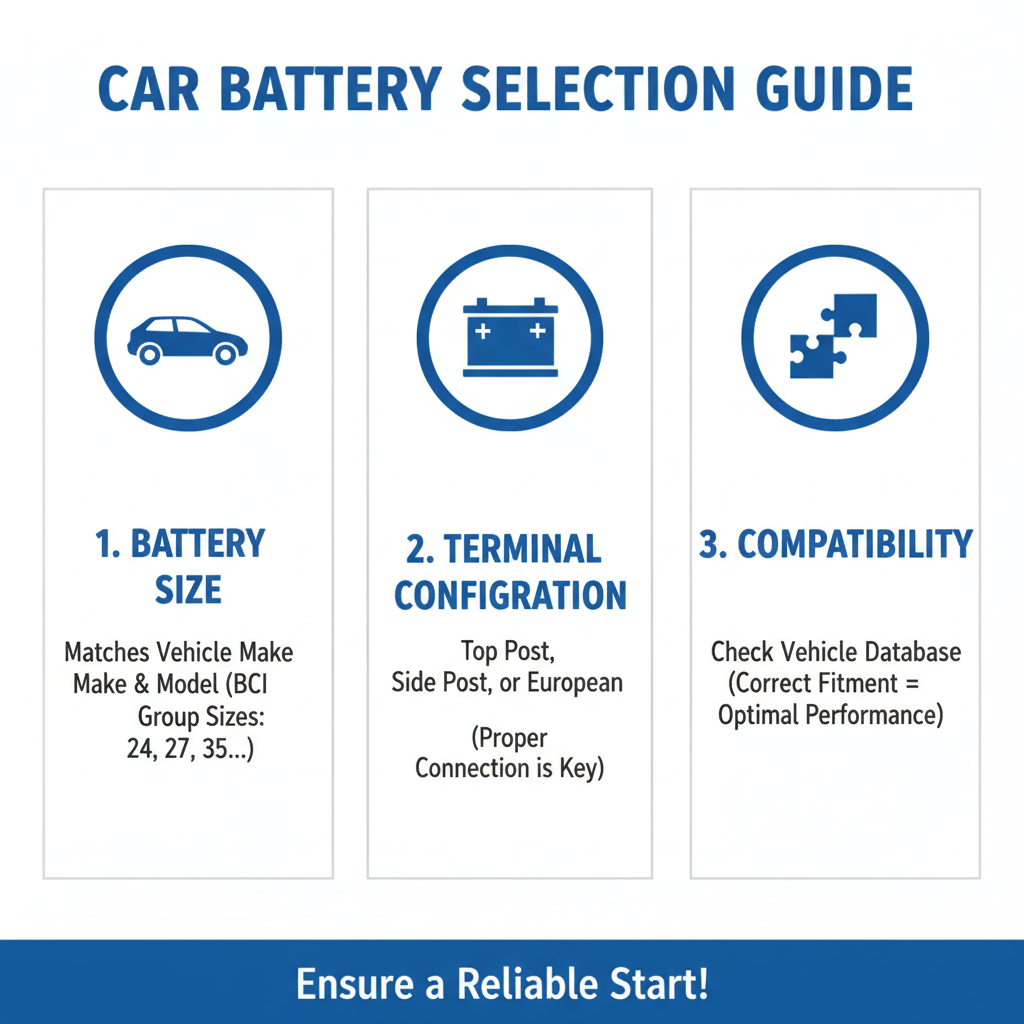
When selecting the right car battery, understanding the specifics of battery size, terminal configuration, and compatibility is crucial. According to the Battery Council International (BCI), vehicles typically have designated battery sizes that align with their make and model, as mismatched sizes can lead to improper fitment and decreased battery performance. Databases containing vehicle specifications often categorize batteries by group size, such as Group 24, Group 27, or Group 35, ensuring drivers have the correct dimensions for their vehicles.
Terminal configuration is another vital factor that can significantly influence the installation process and performance of the battery. A study by the Automotive Battery Manufacturers Association found that incorrect terminal placement can lead to poor electrical connections, increased heat generation, and potential damage to the vehicle’s electrical system. It is essential to verify whether the battery's terminals are aligned with the vehicle’s cabling layout, typically categorized as either top-post or side-post terminals, to avoid complications during installation.
Finally, compatibility with the vehicle's existing electrical system cannot be overlooked. The National Renewable Energy Laboratory highlights that modern vehicles often require batteries that can support advanced electronic features and start-stop technology. Checking for compatibility ensures not just a successful installation but also ongoing performance efficiency, as the wrong battery can lead to frequent replacements and increased overall costs.
Assessing Battery Performance Ratings: CCA, AH, and Reserve Capacity
When selecting the right car battery, understanding battery performance ratings is crucial. The Cold Cranking Amps (CCA) rating indicates a battery's ability to start an engine in cold temperatures, typically measured at 0°F. For colder climates, a battery with a higher CCA is essential, often recommended to be at least 650 CCA. Additionally, the Amp-Hours (AH) rating measures how much energy a battery can store and deliver over time, providing insight into its longevity and capacity for running electrical accessories. Many reliable batteries now offer over 70 AH, catering to modern vehicles with increased electrical demands.
Reserve capacity (RC) is another important metric, reflecting how long a battery can power essential components once the engine is off. This is measured in minutes, and a battery with at least 120 minutes of reserve capacity is advisable for those who prioritize reliability, especially in extreme weather conditions. Recent data suggests that heat can significantly affect battery performance, emphasizing the need for regular testing, particularly as we move into the warmer seasons. Vehicle owners should be proactive in monitoring these ratings to ensure they select a battery that meets their driving needs and environmental challenges.
How to Choose the Right Car Battery for Your Vehicle
This chart illustrates the performance ratings of car batteries based on three key metrics: Cold Cranking Amps (CCA), Amp Hours (AH), and Reserve Capacity (RC). These metrics help in evaluating a battery's suitability for your vehicle's needs.
Tips for Proper Battery Maintenance and Longevity After Purchase
When selecting a car battery, it’s essential not only to find the right fit for your vehicle but also to implement proper maintenance practices to ensure longevity. According to industry reports, a well-maintained battery can last up to 50% longer than one that is neglected. Regularly checking the battery terminals for corrosion and keeping them clean can significantly enhance conductivity and battery performance. Utilizing a battery terminal protection spray can further prevent corrosion buildup.
Another critical aspect of battery care is monitoring the charge level. Studies indicate that letting a battery’s charge drop below 12.4 volts can decrease its lifespan significantly. Investing in a smart charger can help maintain optimal charging levels, especially for vehicles that are not driven regularly. Additionally, extreme temperatures can take a toll on battery health; therefore, parking in a climate-controlled garage during harsh weather conditions can be a practical preventive measure. By adopting these maintenance tips, drivers can maximize their battery's potential and ensure reliable vehicle performance for years to come.
The Future of Energy Storage: Exploring the Benefits of High-Voltage LiFePO4 Lithium Battery Systems
The Future of Energy Storage: Exploring the Benefits of High-Voltage LiFePO4 Lithium Battery Systems
As the demand for efficient and sustainable energy solutions grows, high-voltage lithium iron phosphate (LiFePO4) battery systems have emerged as a cornerstone in energy storage technology. The ENSMAR Hades-series 15KWh modules exemplify this advancement, offering an array of energy storage options through their expandable modular design. This design not only facilitates easy installation but also enhances operational and maintenance efficiency, making it an ideal choice for both residential and commercial applications.
Safety and performance are paramount in energy storage, and LiFePO4 technology delivers on both fronts. Known for its high charging rate, the ENSMAR Hades-series batteries provide robust power to meet the demands of modern lifestyles. Their formulation ensures a longer lifespan compared to other battery chemistries, reducing the frequency of replacements and overall environmental impact. With integrated smart functions, these systems streamline energy management, making them a practical and forward-thinking solution for household energy storage. As we look to the future, high-voltage LiFePO4 systems like the ENSMAR Hades-series will play a pivotal role in the transition towards greener, more resilient energy infrastructures.
FAQS
: Choosing the right car battery is crucial for optimal vehicle performance and longevity, as it provides necessary power for starting the engine, operating accessories, and affects fuel efficiency and reliability.
Approximately 25% of all vehicle breakdowns are battery-related, emphasizing the importance of selecting a high-quality battery.
Lithium batteries offer higher energy density and longer lifespan, lasting up to three times longer than lead-acid batteries, resulting in fewer replacements and lower costs for vehicle owners.
The most common types of car batteries are lead-acid, lithium-ion, and nickel-metal hydride.
Lithium-ion batteries are gaining popularity due to their lightweight design and higher energy efficiency, especially in electric vehicles (EVs).
The demand for advanced battery solutions is primarily driven by the growing electric vehicle sector, projected to increase the global battery market significantly by 2032.
Lead-acid batteries are widely used due to their affordability and proven reliability, making them suitable for conventional vehicles, while lithium-ion batteries provide enhanced efficiency and lifespan.
Nickel-metal hydride batteries continue to serve hybrid vehicles, offering a balance between performance and environmental impact.
Understanding the different types of batteries available and their specific advantages enables consumers to make better choices tailored to their driving needs.
Choosing the right car battery aligns with sustainable practices and leads to a smarter and greener future in transportation.
Conclusion
Choosing the right car battery is crucial for ensuring the optimal performance and longevity of your vehicle. Understanding the importance of selecting a suitable car battery begins with identifying your vehicle's specific battery specifications and requirements. With various types of car batteries available in the market, it's essential to evaluate different brands for their quality and reputation. Considerations such as battery size, terminal configuration, and compatibility are vital in guaranteeing a proper fit for your vehicle.
Additionally, assessing battery performance ratings, including Cold Cranking Amps (CCA), Ampere-Hours (AH), and Reserve Capacity, is important for reliable operation. After making your purchase, implementing proper battery maintenance practices will further enhance its longevity. Companies like Shenzhen Ensmar Technology Co., Ltd. provide advanced energy storage solutions that can benefit industries, including automotive, ensuring that users have access to efficient lithium battery options tailored for their specific needs.