The Pioneer Of Battery Innovations
contact us
Leave Your Message


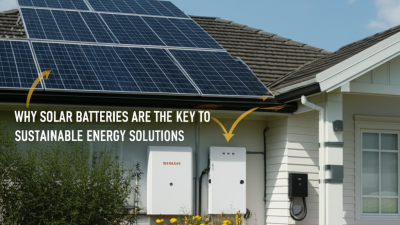
In today’s world, where sustainability is more important than ever, choosing the right energy storage options can really make a difference in how well we make use of renewable resources. You’ve probably heard about Solar Bank Batteries—they've become pretty essential for both homes and businesses. These batteries let folks harness solar energy more efficiently, making it easier to cut down on electricity bills and rely less on the grid. According to the International Energy Agency (IEA), the market for solar battery storage is expected to grow a lot – hitting around 30 GWh by 2025 – mainly because more people are adopting solar power systems. This shift isn’t just about performance; it’s also about moving towards cleaner energy and being more independent from traditional power sources.
But, let’s be honest—that many options out there can feel a bit overwhelming. With all the new tech and different needs, it’s super important to know what to look for when picking a Solar Bank Battery. A report from BloombergNEF highlights a few key things: efficiency, how long the batteries last, and safety features are total must-haves. Plus, it’s a good idea to check if the batteries will work well with your existing solar panel setup—that way, you’ll get the best bang for your buck. We’re here to help you sort through all this, so in this guide, we’ll cover the main criteria and share some expert tips to help you find the perfect Solar Bank Battery for your energy needs.

When selecting solar bank batteries, it's crucial to understand the key features that can significantly impact performance and lifespan. Firstly, the battery capacity, typically measured in ampere-hours (Ah), determines how much energy can be stored and utilized. Companies like Shenzhen Ensmar Technology Co., Ltd. offer advanced lithium energy storage solutions that provide high capacity combined with efficient energy management, ensuring that you can power your devices reliably.
Another important factor to consider is the discharge rate, which indicates how quickly the stored energy can be accessed. A higher discharge rate is beneficial for applications that require a sudden surge of power. Additionally, looking for batteries with integrated safety features, such as overcharge protection and thermal management, is essential for maintaining performance and prolonging battery life. ENSMAR’s Lithium Battery systems are designed with these features in mind, catering to industries that demand both reliability and efficiency in renewable energy applications.
| Feature | Description | Importance Level |
|---|---|---|
| Capacity (Ah) | Total energy stored, impacting how many devices can be powered and for how long. | High |
| Voltage (V) | The output voltage influences compatibility with connected devices. | Medium |
| Cycle Life | The number of charge/discharge cycles before the battery capacity significantly degrades. | High |
| Weight | Physical weight may affect portability for mobile applications. | Medium |
| Warranty Period | Duration that the battery is guaranteed against faults, indicating confidence in durability. | High |
| Charging Speed | Time taken to charge the battery fully; affects usability based on required downtime. | Medium |
| Temperature Range | Operating temperature range affects efficiency and lifespan in various conditions. | Medium |
The 2023 Global Solar Energy Market Report highlights the transformative potential of off-grid solar power systems, particularly the NSMAR Tethys-series. These stackable all-in-one systems are designed to provide flexible, efficient, and sustainable energy solutions while addressing the growing demand for energy independence. By incorporating innovative modular designs, the Tethys-series allows users to tailor their energy storage and usage based on specific needs, which is especially beneficial for households seeking to minimize their carbon footprint.
One of the standout features of the NSMAR Tethys-series is its scalability. Users can easily select the inverter power and battery capacity that best suits their requirements, making it a cost-effective choice for both initial investment and future expansion. The suffixes "-H" and "-V" denote the system's lower height and small footprint, respectively, allowing for easier integration into diverse residential settings. This adaptability, paired with its all-in-one design, makes the Tethys-series an ideal solution for new installations of household energy storage, ensuring that users have a robust and reliable off-grid power source.
: The primary considerations when selecting solar bank batteries are capacity, measured in amp-hours (Ah), and power output, measured in watts (W). Capacity indicates how much energy the battery can store, while power output represents the rate at which that energy can be delivered.
Capacity directly affects how much energy a battery can supply. For example, if a household requires around 30 kWh per day, you would need a battery or a combination of batteries that can efficiently meet this demand.
Lithium-ion batteries generally have a higher energy density, enabling more energy storage in a smaller size, and last longer (10 to 15 years) compared to lead-acid batteries (3 to 5 years). This results in lower lifetime costs and makes lithium-ion a smarter investment.
Industry projections indicate that the global lithium-ion battery market is expected to grow by over 20% annually through 2025, highlighting the increasing demand for durable and efficient energy storage solutions.
Always check the battery’s charge cycles and warranty. A higher number of charge cycles typically indicates a longer lifespan, while a solid warranty helps protect your investment.
Compatibility with existing solar systems is crucial, as some batteries integrate seamlessly with popular solar setups, while others may require additional equipment to function properly.
Customer reviews and expert ratings provide valuable insights into the real-world performance of the batteries you are considering, helping you make an informed purchasing decision.
Beyond longer lifespan and higher energy density, lithium-ion batteries also tend to be more efficient and require less maintenance compared to lead-acid batteries.
It is recommended to assess your energy consumption habits using energy monitoring devices, which can offer insights into your daily usage and help identify the best battery solution for your needs.
Consumers should prioritize performance, such as capacity and discharge rate, along with pricing. Batteries with high energy efficiency and user-friendliness will better meet energy demands.
In the quest for sustainable energy solutions, choosing the right Solar Bank Batteries is pivotal for optimizing energy storage systems. This guide emphasizes the importance of understanding key features such as capacity, power output, and battery types, notably the contrast between lithium-ion and lead-acid options. With a focus on lifespan and warranty, consumers are encouraged to consider long-term investments in their energy solutions.
In addition, the article highlights the top Solar Bank Batteries of 2025, assessing their performance and pricing to aid informed decision-making. For optimal performance, installation and maintenance tips are provided, ensuring users can maximize their energy storage efficiency. Companies like Shenzhen Ensmar Technology Co., Ltd. are at the forefront, offering cutting-edge lithium battery solutions that cater to diverse energy demands across industries, reinforcing the relevance of advanced technology in the storage sector.